Spouse Visa kItas indonesia

Spouse Visa KITAS in Indonesia: Things You Need to Know

What Is a Spouse Visa KITAS? A spouse visa KITAS is a visa for a foreigner who is married to an Indonesian citizen. This spouse visa KITAS holder allows a foreigner to stay, but not to work or be employed in Indonesia. Hence, to obtain this sort of visa is by getting married to an Indonesian citizen. You also need to gain an official marriage certificate approved by the Indonesian government. Authorized offices that can perform marriage legally are religious affairs offices (Kantor Urusan Agama / KUA) and civil registry offices (kantor catatan sipil). Meanwhile, there are two sorts of spouse visas, comprising spouse visa KITAS (limited stay permit) and spouse visa KITAP (permanent stay permit) gained through spousal sponsorship. The difference is a spouse visa KITAS with the validity of one year, but a spouse visa KITAP with the validity of 5 years. Learn more about KITAP in Indonesia!   Requirements to Obtain a Spouse Visa KITAS Here are some required documents you need to prepare to apply for a spouse visa KITAS: A copy of your valid passport. Personal photo 4×6 size A copy of your official marriage certificate or marriage book  Then, a copy of the ID card (KTP) of your Indonesian spouse with the married status. A copy of the family card (Kartu Keluarga / KK) of your Indonesian spouse with the married status. A copy of the latest bank statement of your Indonesian spouse. A sponsor letter. Other related documents. How to Obtain a Spouse Visa KITAS Indonesia? Follow these steps to apply for a spouse visa KITAS! Document Preparation: Gather all necessary legal documents mentioned above. Payment: Ensure you confirm and complete your payment well before your travel date. Application Form:  We will complete the visa application and ensure it is successfully approved. Submission: We submit your documents and recommendations to the immigration office. Electronic Visa: Receive your electronic visa valid for one or two years. Arrival: Enter Indonesia via any airport and proceed through the VITAS counter. Permit Issuance: Your residence permit will be sent to our email after arrival and passport stamping. Ready: Once we get your stay permit, we will share it with you. Note: No need to go to i Types of Spouse Visas in Indonesia According to the new law, spouses of Indonesian citizens are eligible to apply for two main types of spouse visas, designed to accommodate different durations of stay: E31A (One Year): This visa provides a one-year residence permit, allowing you to live in Indonesia for a year with the flexibility to enter and exit the country multiple times during its validity. This is ideal for those who may need to travel frequently but wish to maintain a stable residence in Indonesia. E31A (Two Years): This visa offers a two-year residence permit, granting a longer duration of stay with the same benefits of multiple entries. It’s perfect for those looking for a more extended, uninterrupted stay in Indonesia, ensuring stability and continuity in their residency. Both types of spouse visas are tailored to ensure that you can enjoy the benefits of residing in Indonesia while maintaining the ability to travel as needed. These visas support the goal of family reunification, providing spouses with the legal framework to live together in Indonesia without the constant need for renewal.   VITAS Approval The first thing you do is prepare the required documents as mentioned above. Afterward, apply for a VITAS (temporary stay visa pre-approval). Next, the VITAS will be issued to your email in an electronic visa format (E-Visa) to be printed and brought with you. Once you get an E-Visa, you can enter Indonesia.    Travel to Indonesia Then, you can travel to Indonesia once your VITAS has been approved. The immigration department will grant a stamp on your passport with the ITAS. This means you can stay in Indonesia legally. This ITAS is valid for one year and can be extended. Obtain KITAS After staying in Indonesia for a few days, you can visit the immigration offices to gain your KITAS which is a physical card to show the authorities you are eligible to stay in Indonesia. The KITAS is now available as an online record together with MERP (Multiple Exit Re-entry Permit). Your MERP will boast the same duration as your KITAS.   Do you need our help? Please contact us by WhatsApp   Civil Registration and Reporting Afterward, you must register and report to a related party. You should proceed in the civil administration department to obtain  an Indonesian Police Report Letter (Surat Tanda Melapor / STM) and  a Certificate of Registration for Temporary Resident (Surat Keterangan Pendaftaran Penduduk Sementara / SKPPS Note that, after 2 (two) years of marriage with your Indonesian spouse, you can convert your KITAS/ITAS (limited stay permit) to KITAP (permanent stay permit).    What Are The Benefits of Getting a Spouse Visa KITAS? Furthermore, by having a spouse KITAS, you will gain some benefits as follows: Validity of MERP (Multiple Exit/Re-Entry Permit) for  2 years Eligible to get an Indonesian driver’s license (SIM / Surat Izin Mengemudi). Eligible to open bank accounts in Indonesia. Ability to apply for loans and credit cards in Indonesia. Eligible for local prices of tourist attractions. Eligible for becoming an Indonesian citizen. Validity for staying in Indonesia for 5 years (for a spouse KITAP). Getting an Indonesian ID card (KTP)  with the validity of 5 years (for a spouse KITAP). In conclusion, by having the spouse visa KITAS, you will gain some benefits that will ease living together with your spouse in Indonesia legally.  If you do not have time to apply for your spouse visa KITAS personally, please contact SAM Consulting with a professional team ready to help any time. Furthermore, SAM Consulting has a 10 years proven track record of handling international clients.   Switching from a Spouse Visa to a Permanent Stay Permit (KITAP) Good news for spouses of Indonesian citizens! After holding a spouse visa (KITAS) for two years, you


Working visa kitas indonesia

Working Visa KITAS Indonesia: A Complete Guide to Obtain It

Do you plan to build a career in Indonesia? You should have a working visa and work permit to work in Indonesia. Prepare some required documents to obtain this visa as this is a long process that involves related parties, such as the Ministry of Manpower (MOM), Indonesian Investment Coordinating Board (BKPM), Foreign Worker Utilization Plan (RPTKA), and your employer.  What Is a Working Visa KITAS? The Working Visa KITAS is issued to foreigners to be employed in Indonesia. However, foreigners also need to gain a work permit known as the Approval of Foreign Worker Utilization Plan (Pengesahan RPTKA/Rencana Penggunaan Tenaga Kerja Asing) mentioning the job titles,  specific tasks, and the length of employment of a foreign worker.  Furthermore, to apply for a working visa KITAS, you must obtain sponsorship from your employer which is a registered company within Indonesia. These companies include: An Indonesian-owned company (PT PMDN). A foreign-owned company (PT PMA). A representative office. A working KITAS/ITAS holder also can re-enter Indonesia multiple times with one permit referred to as a MERP (Multiple Exit and Re-entry Permit). This working visa is suitable for foreigners who would like to come to Indonesia for long-term work purposes. Also, this visa is a frequently issued visa for foreign workers under a contract with an employer in Indonesia. Meanwhile, you can apply for a business visa to participate or attend business-related purposes, such as business talks, a short course, a short training, purchase goods, meetings, a conference/seminar/exhibition, as well as negotiating potential business deals or any other business-related purposes.  The business visa is not allowed to be hired or employed by a company/organization in Indonesia, or generate any income while in Indonesia   The Validity of Working Visa KITAS   Do you need our help? Please contact us by WhatsApp   Laws and Regulations The Indonesian Government issued the Ministry of Manpower (MOM) Regulation number 8 of 2021 concerning implementing regulation of government regulation number 34 of 2021 concerning the utilization of foreign workers. This regulation revoked MOM Regulation number 10 of 2018 concerning the utilization of foreign workers.  That new regulation mentions the Foreign Worker Utilization Plan Approval (Pengesahan RPTKA) as an authority to issue a limited stay visa (VITAS). The immigration in Indonesia will issue a limited stay permit (KITAS/ITAS) once the foreign workers have received a VITAS.    Requirements for Obtaining a Working Visa For foreign workers (employees) who are willing to gain a working visa KITAS should meet these requirements as follows: Indonesian VITAS application form completed, dated, and signed. An original passport valid for more than 6 (six) months expiration date upon arrival in Indonesia and has at least 3 blank pages (amendment and endorsement pages cannot be used). One colored passport-sized photo (not smaller than 4×6 cm). A copy of the highest degree of education. Proof of work experiences concerning the position you apply for. A contract of employment showing job description and salary offered in Indonesia. A reference letter from the employer citing the purpose of visit and length of stay. Proof of life insurance, medical insurance, and travel for your entire stay in Indonesia. Proof of sufficient funds. Other related documents. Those required documents should be legalized by relevant authorities.    The Procedure to Obtain a Working Visa KITAS   To gain a working visa KITAS, you should obtain a work permit, VITAS, and ITAS. Here are some differences between those terms: A work permit (IMTA) is intended for foreigners to work in Indonesia. After receiving an IMTA, the foreigners need to gain a limited stay permit (KITAS). VITAS (Visa Izin Tinggal Terbatas) is a stay permit issued by the Indonesian Immigration Department. ITAS is the immigration status materialized as a stamp on a passport. KITAS is the physical card provided when ITAS is granted. Once you have found an employer in Indonesia, you can follow these procedures:   Your Employer Applies for Foreign Worker Utilization Plan (RPTKA) First, your employer will apply for a Foreign Worker Utilization Plan (RPTKA/Rencana Penggunaan Tenaga Kerja Asing) from the Ministry of Manpower (MOM) to prove that you are qualified for a particular job. Once the MOM has approved it, your employer will proceed to apply for an Indonesian work visa.    Obtain an Indonesian Work Permit (IMTA) Afterward, your employer applies for a work permit (IMTA) to the Ministry of Manpower along with required documents citing you are eligible to gain the job. You should also attach your work and education history, a copy of your passport, and other related documents. Once approved, your employer will receive an authorization document mentioning you are allowed to work in Indonesia.   Apply for a VITAS The next step is applying for a VITAS (temporary stay permit).  In the beginning, your employer should submit the VITAS application form to the Indonesian Investment Coordinating Board (BKPM) which takes 5 working days. Once approved, the BKPM will issue a recommendation letter to the Indonesian Immigration Department.  Afterward, you will apply for a VITAS at the Indonesian Consulate or Embassy. You also will attach the required documents comprising the work permit (IMTA) and the BKPM’s recommendation letter.    Enter Indonesia Then, you can travel to Indonesia once your VITAS has been approved. The immigration department will grant a stamp on your passport with the ITAS. This means you can stay and work in Indonesia legally. This ITAS is valid for one year and can be extended.   Obtain KITAS After staying in Indonesia for a few days, you can visit the immigration offices to gain your KITAS which is a physical card to show the authorities you are eligible to stay and work in Indonesia. KITAS is now available as an online record together with MERP (Multiple Exit Re-entry Permit). Your MERP will boast the same duration as your KITAS. In addition,, you should proceed to obtain an Indonesian Police Report Letter (Surat Tanda Melapor / STM) in the local municipality’s police department and population office. Also you need to gain a

Requirement procedure for staypermit indonesia

KITAS (Limited Stay Permit) Indonesia: Requirements & Procedure

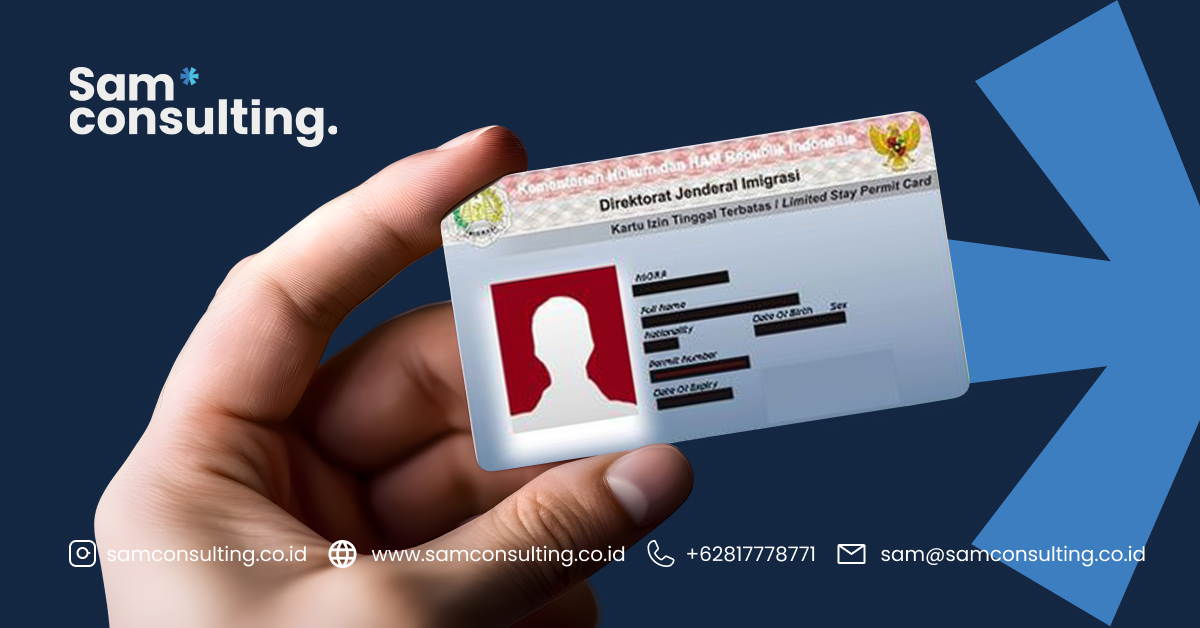
What Is KITAS / ITAS? ITAS (Izin Tinggal Terbatas) is a Limited Stay Permit for foreigners or expatriates to stay or work in Indonesia for a period of time. In addition, the Indonesian government issued a physical card for an ITAS known as KITAS (Kartu Izin Tinggal Terbatas) Limited Star Permit Card, but now KITAS is issued digitally.  This Limited Stay Permit (ITAS) is valid for 6 (six) months, 1 (one) year up to 2 (two) years. This permit can be extended by an applicant according to laws and regulations. Then, after 2 (two) years, it is still possible for foreigners to extend it.    Laws and Regulations Meanwhile, the Indonesian Government regulates regarding KITAS (limited stay permit) as follows: Law number 13 of 2013 concerning Manpower. Government Regulation (PP) number 31 of 2013 concerning Implementing Regulation of Act number 6 of 2011 concerning Immigration. Regulation of Ministry of Law and Human Rights (Permenkumham) number 27 of 2014. Government Regulation number 26 of 2016 concerning Amendment to Government Regulation number 31 of 2013 concerning Implementing Regulation of Act number 6 of 2011 concerning Immigration. (PP 26 / 2016). Regulation of Ministry of Law and Human Rights number 16 of 2018 concerning the procedure of issuing visa and stay permits of foreign workers. Presidential Regulation number 20 of 2018 concerning the use of foreign workers.  A Sort of KITAS The government issues three kinds of KITAS (limited stay permit), namely: KITAS Working Visa KITAS or ITAS is commonly used for foreigners who want to work in Indonesia. However, foreigners also need a work permit known as the Approval of Foreign Worker Utilization Plan (Pengesahan RPTKA) mentioning the job titles,  specific tasks, and the length of employment of a foreign worker.  Furthermore, to apply for a working visa KITAS, you must obtain sponsorship from your employer which is a registered company within Indonesia. These companies include: An Indonesian-owned company (PT PMDN). A foreign-owned company (PT PMA). A representative office. A working KITAS/ITAS holder also can re-enter Indonesia multiple times with one permit that is referred to as a MERP (Multiple Exit and Re-entry Permit).   KITAS Spouse Visa  The main requirement to obtain a Spouse Visa KITAS /ITAS is getting married to an Indonesian citizen. You also need an official marriage certificate approved by the Indonesian government. Authorized offices that can perform marriages are religious affairs offices (Kantor Urusan Agama / KUA) and civil registry offices (kantor catatan sipil). Furthermore, getting married directly in Indonesia is the best choice for a spouse visa KITAS. Based on marriage law in Indonesia, the marriage to an Indonesian spouse is valid only when it is performed in accordance with the regulations and religious beliefs of both husband and wife in Indonesia. This KITAS spouse visa only allows foreigners to stay, not being employed in Indonesia, only as a freelancer.   Do you need our help? Please contact us by WhatsApp   KITAS Retirement Visa KITAS Retirement Visa is for foreigners with the age of 55 years or older and would like to spend their retirement in Indonesia. To obtain this KITAS retirement visa, you can enter Indonesia first, then after a month, you can apply for a KITAS retirement visa.  In addition, the KITAS retirement visa is a type of long-term visa that you can obtain through an online application and should meet some requirements.  With a retirement KITAS/ITAS, you can live in Indonesia, enter and exit the country as many as possible. Also you are allowed to obtain a local bank account and hire a driver or domestic helper. However, please note that you are not allowed to work at all in Indonesia.    Who Is Eligible to Apply for KITAS (limited stay permit)? The following are the ones who are eligible to apply for KITAS (limited stay permit): Foreigners entering Indonesia with a limited stay visa. Children that were born in Indonesia with their father and/or mother of a KITAS holder at the time of birth. Foreigners that are converted from a visit stay permit. Foreigners who get married legally to an Indonesian citizen. Children of foreigners that are legally married to Indonesian citizens. Captain, crew, or foreign experts on board ships or institutions which operate in Indonesian waters and jurisdictions.    Required Documents to Apply for KITAS Here are some required documents to obtain KITAS, namely: Your valid passport and a colored copy of your passport. Proof of financial solvency Two passport-size colored pictures Any other documents that may be requested by the Immigration Department depending on the KITAS you apply for. Procedure to Obtain KITAS For foreigners who would like to apply for KITAS, Sam Consulting offers a KITAS service that makes it easy for you to obtain KITAS.  That’s all the review of limited stay permit or KITAS/ITAS. If you need more information regarding the visa or permit, please contact SAM Consulting with a professional team ready to help any time. Furthermore, SAM Consulting has a 10 years proven track record of handling international clients.   Do you need our help? Please contact us by WhatsApp  

Visa on Arrival Indonesia

Visa on Arrival (VOA) Indonesia: Requirements and Procedure

Do you need a Visa on Arrival (VOA) Indonesia? You can process the Visa on Arrival (VoA) when arriving in Indonesia. However, not all airports and seaports are available for VOA and which country should have VOA. Learn more regarding VOA below! What Is Visa on Arrival (VOA)? A Visa on Arrival (VOA) is a visa that is issued for citizens of specific countries upon their arrival in Indonesia.   In addition, foreigners do not need to gain a visa from an Indonesian Embassy abroad. They can get this VOA when landing at certain airports and seaports in Indonesia. To get this VOA, a visitor should meet some specific criteria, such as country of origin, time frame, specific reason for entering Indonesia, and the length of time for which you have held the passport Furthermore, the Visa on Arrival is not a visitation visa nor a work visa, so that you cannot convert to obtain other immigration permits.   The Validity Period of VOA This VOA allows foreigners to visit Indonesia for 30 days, not 1 (one) month. The count begins upon arrival in Indonesia and ends on the day of departure.  The VOA can be extended for a maximum of another 30 days. Note that 7 (seven) working days prior to the expiration date, you should start extending your visa in the immigration office in person.  However, this one-time extension cannot be extended further. You will be charged an overstay fine if you spend more time in Indonesia than what is on your VOA.   Law and Regulation of Visa on Arrival (VOA) The Indonesian Government regulates Visa on Arrival (VOA) through the Regulation of the Minister of Law and Human Right of the Republic of Indonesia Number 39 of 2015 concerning Visa on Arrival (VOA).   The Aim of VOA This VOA is for foreigners entering Indonesia with the aim of: Leisure and tourism. Family. Social. Art and Culture. Government visits. Giving a lecture or attending a seminar. Attend a meeting held by the Head office or Representative office in Indonesia. While in transit on the way to another country.   The List of Airports Across Indonesia Having Visa on Arrival (VOA) Facilities Sultan Iskandar Muda, Banda Aceh, Nanggroe Aceh Darussalam; Sultan Syarif Kasim II, Pekanbaru, Riau; Hang Nadim, Batam, Kepulauan Riau; Minangkabau, Padang, Sumatera Barat; Sultan Mahmud Badaruddin II, Palembang, Sumatera Selatan; Soekamo-Hatta, Jakarta, DKI Jakarta; Halim Perdana Kusuma, Jakarta, DKI Jakarta; Husein Sastranegara, Bandung, Jawa Barat; Adi Sucipto, Yogyakarta, Daerah Istimewa Yogyakarta; Ahmad Yani, Semarang, Jawa Tengah; Adi Sumarmo, Surakarta, Jawa Tengah; Juanda, Surabaya, Jawa Timur; Supadio, Pontianak, Kalimantan Barat; Sepinggan, Balikpapan, Kalimantan Timur; Sam Ratulangi, Manado, Sulawesi Utara; Hasanudin, Makassar, Sulawesi Selatan; Ngurah Rai, Denpasar, Bali; El Tari, Kupang, Nusa Tenggara Timur; Kualanamu, Medan, Sumatera Utara; and Lombok, Lombok Tengah, Nusa Tenggara Barat.   The List of SeaPorts Across Indonesia Having Visa on Arrival (VOA) Facilities Sekupang (in Kupang, East Nusa Tenggara); Citra Tritunas (Harbor Bay) (in Batam, Riau Archipelago); Nongsa (in Batam, Riau Archipelago); Marina Teluk Senimba (in Batam, Riau Archipelago); Batam Center (in Batam, Riau Archipelago); Bandar Bintan Telani Lagoi (in Tanjung Uban, Riau Archipelago); Bandar Sri Udana Lobam (in Tanjung Uban, Riau Archipelago); Sri Bintan Pura (in Tanjung Pinang, Riau Archipelago); Tanjung Balai Karimun (in Tanjung Balai Karimun, Riau Archipelago); Belawan (in Tanjung Balai Karimun, Riau Archipelago); Sibolga (in Tanjung Balai Karimun, Riau Archipelago); Yos Sudarso (in Dumai, Riau); Teluk Bayur (in Padang, West Sumatera); Tanjung Priok (in the Special Region of the Capital City of Jakarta); Tanjung Mas  (in the Special Region of the Capital City of Jakarta); Padang Bai (in Karangasem, Bali); Benoa (in Badung, Bali); Bitung  (in Bitung, North Sulawesi); Soekarno-Hatta (in Makassar, South Sulawesi); Pare-Pare  (in Pare-Pare, South Sulawesi); Maumere (in Maumere, East Nusa Tenggara); Tenau (in Kupang, East Nusa Tenggara); Jayapura  (in Kupang, East Nusa Tenggara).   Do you need our help? Please contact us by WhatsApp   The List of Countries Enjoying VOA Not Exceeding 30 Days Argentina Australia Austria Algeria Bahrain Belgium Brazil Bulgaria Czech Republic Canada Cyprus Denmark Estonia Egypt Fiji Finland France Germany Greece Hungary India Iceland Ireland Italy Japan Kuwait Latvia Libya Lithuania Liechtenstein Luxembourg Maldives Malta Mexico Monaco New Zealand Netherlands Norway Oman Panama People’s Republic of China Poland Portugal Qatar Romania Russia Saudi Arabia Slovak Republic Slovenia Spain South Africa South Korea Suriname Sweden Switzerland Taiwan PRC Timor Leste Tunisia Turkey Uni Arab Emirates United Kingdom United States of America   The List of Visa Free Entry on Arrival and Free of Charge Meanwhile, Indonesia also applies Visa Free Entry on Arrival and Free of Charge for 11 (eleven) countries and territories as follows: Brunei Darussalam Chile Hong Kong Macau Malaysia Morocco Peru Philippines Singapore Thailand Vietnam   Requirements of Obtaining VOA An original passport valid for more than 6 months beyond the intended length of stay and has at least 1 blank page (amendment and endorsement pages cannot be used). A copy of round trip flight itinerary/electronic airline tickets to and from Indonesia. Visa fee for VOA Other related documents.   The Procedure of Obtaining VOA Here are some steps to obtain VOA: Travel to Indonesia and arrive at the airport of your choice. Please note that the airport you choose is the one that can process your Visa on Arrival application. Find the Visa on Arrival Counter upon arrival. Queue at Visa on Arrival Counter at International Airport. Please wait for your Visa on Arrival. Pay for the fee. Go to the immigration counter. Show your passport with the receipt to obtain a stamp. In conclusion, the Visa on Arrival (VOA) Indonesia ease you to visit Indonesia for 30 (thirty) days and can be extended for a maximum of another 30 days. If you need more information regarding the visa, please contact SAM Consulting with a professional team ready to help any time. Furthermore, SAM Consulting has a 10 years proven track record of handling international clients.   Do you need our help? Please contact us by WhatsApp

Business Visa in Indonesia

Business Visa Indonesia: Requirements & How to Obtain 2024

Who would like to visit Indonesia for business purposes? You should have Indonesia business visa before entering Indonesia. Furthermore, what requirements do you need to obtain it? Get to know all about an Indonesia business visa here! What Is Business Visa Indonesia? Business visa Indonesia is issued for foreigners who would like to participate or attend in business talks, a short course, a short training, purchase goods, meetings, a conference/seminar/exhibition, as well as negotiate potential business deals or any other business-related purposes.  However, you are not allowed to be hired or employed by a company/organization in Indonesia, or generate any income while in Indonesia. To do so, you should obtain an Indonesian work permit. Learn more about stay permit in Indonesia.   A Sort of Business Visa Indonesia In Indonesia, there are two kinds of Indonesia business visa, namely: Single Entry A single-entry business visa is valid (must be used) within 90 (ninety) days from the date of issuance, the 60-days stay permit starts from the date the traveler enters Indonesia.  You can extend this kind of visa for up to 4 (four) times, 30 days for each extension, at the Immigration Offices in Indonesia. Furthermore, to extend a visa, it is mandatory to get a letter of sponsorship from an organization or an Indonesian resident. However, the approval for visa extension is in accordance with the decision of Indonesian Immigration.   Multiple Entry A multiple-entry business visa is valid (must be used) within 90 (ninety) days from the date of issuance. In addition, this multiple-entry business visa can be used for 1 (one) year multiple visits to Indonesia without exceeding 60 (sixty) days for each visit.  The advantage of holding this visa is that the number of stays in the country per year is not limited. However, the amount of time you can spend is limited to 60 (sixty) days that you do not need to renew during each trip. For instance, the multiple-entry business visa Indonesia applies for 60 days for each entry. Before the 60 days expire, you need to leave Indonesia and go back to your country. After some days, you may come back to Indonesia without renewing your visa anymore.   Who Is Eligible to Get Business Visa Indonesia? Although this business visa Indonesia is flexible, there is a list of restricted countries in which this business visa application might be rejected. These countries consist of Cameroon, Israel, Guinea, Liberia, Nigeria, Iraq, Afghanistan, and North Korea.   Requirements to Obtain Business Visa Indonesia Single Entry Here are some requirements to obtain a single-entry business visa: Original passport valid for more than 6 months beyond the intended length of stay and has at least 2 blank pages left (amendment and endorsement pages cannot be used). Visa Application Form completed, dated, and signed. 1 (one) passport photo dated not older than 6 months (not smaller than 4×6 cm). A copy of round trip flight itinerary/electronic airline tickets to and from Indonesia. Other related documents. Multiple Entry Here are some requirements to obtain a multiple-entry business visa: An authorization letter from the Directorate General of Immigration in Jakarta, Indonesia. An original passport valid for more than 18 months beyond the intended length of stay and has at least 2 blank pages left (amendment and endorsement pages cannot be used). Visa Application Form completed, dated, and signed. 1 (one) passport photo dated not older than 6 months. A copy of round trip flight itinerary/electronic airline tickets to and from Indonesia. Other related documents. How to Obtain Business Visa Indonesia To get Business Visa Indonesia, you should follow some steps, as follows: Submit all required documents. All required documents are uploaded to the online immigration system.  Once the applicant meets the requirements, the immigration officer will issue an E-Visa (Electronic Visa) that needs to be printed out. The applicant is allowed to enter Indonesia by using E-Visa. In conclusion, a business visa Indonesia is the right choice for foreigners who would like to attend for any business-related purposes. If you need more information regarding the visa, please contact SAM Consulting with a professional team ready to help any time. Furthermore, SAM Consulting has a 10 years proven track record of handling international clients.   Need our help? Contact us by WhatsApp    

How to register trademark in Indonesia

Trademark in Indonesia: Definition, How to Register and Benefits

Registering a trademark in Indonesia brings many advantages for your business. You also gain exclusive rights to your business logos, branding, and symbols. Know more details about the trademark below! Definition of a Trademark A trademark is defined as a brand that is used on goods traded by some people collectively agreed or legal entity to distinguish other similar goods. In addition, the examples of trademarks in Indonesia for products are Apple, Samsung, SONY, NOKIA, Sosro, LG, and so on.  A trademark differentiates one from others through symbols, colors, designs, words, and graphics that identify a business. Protecting trademarks is an asset in leading to greater customer satisfaction and higher sales.  In addition, by registering a trademark in Indonesia, the owner’s rights are protected and can file legal action against unauthorized use of the trademark.   Regulation of a Trademark in Indonesia Indonesian government issues some rules to regulate the trademark in Indonesia, as follows: Law Number 20 of 2016 (Trademark and Geographical Indication Law). Ministerial Regulations of Law and Human Rights Number 67 of 2016 regarding Trademark Registration.     Benefits of Registering a Trademark in Indonesia By registering your trademark, you will gain some advantages for companies, namely: The exclusive law protection for owners of intellectual property rights.  A registered trademark definitely is protected from unauthorized use of the trademark. Then, the owner of rights can file legal action against claims of infringement by other parties. First to file. In accordance with Indonesian Trademark Law No. 20 of 2016, the government applies the “first to file’ method which means the first legal person, firm or legal entity that files for a particular trademark in Indonesia gains the priority for its use.    Need our help? Contact us by WhatsApp Avoid loss due to unauthorized use of a trademark. Due to an unregistered trademark, anybody can use the trademark. This definitely gives disadvantages, even the loss for your business as anybody can easily duplicate the trademark so that customers can’t distinguish it from other similar brands.  Increase profit The registered trademark boasts added value in the eyes of their customers due to the product having differentiation from other similar brands. In addition, the company can use this trademark to approach their brand closer to their prospects. Enhance competitiveness in business A trademark that is already registered cannot be duplicated by anybody or a legal entity without authorized use of the trademark.   Requirements of Registering a Trademark in Indonesia To register a trademark, there are some requirements to follow for the person and legal entity.  A trademark for a legal entity requires the documents as follows: A deed of company establishment. Scan / photocopy personal identity and Tax Payer Number (Nomor Pokok Wajib Pajak) of president director. The description of business name, business field, and name of a trademark that will be registered. Logo of trademark (if any) with the size of trademark label min. 2×2 cm and max 9×9 cm in the form of JPG. Other related documents. A trademark for the person requires the documents as follows: Scan/photocopy Indonesian ID (KTP) of the applicant (Indonesian citizen). Scan / photocopy KITAS / KITAP of applicant (foreigner or expatriate). The description of business name, business field, and name of a trademark that will be registered. Logo of trademark (if any) with the size of trademark label min. 2×2 cm and max 9×9 cm in the form of JPG. Other related documents.   Need our help? Contact us by WhatsApp   How to Register a Trademark in Indonesia The following is a procedure to register a trademark in Indonesia: Brand Checking This first step is to check whether the trademark is already registered or not. Filling in the Application Form If the trademark is not registered yet, next register through https://merek.dgip.go.id/. Then, fill in the form that contains: You should translate the meaning of the trademark into Bahasa if the trademark in English. Formality Examination If the application is accepted, the Directorate General of Intellectual Property Rights (DGIP) conducts a formality examination. Then, if the application meets the requirements, the announcement of the application in the official Trademark gazette will be published for 2 months. This is to see whether there will be any opposition from parties. If there is any opposition, the applicant can issue a counter statement to reject the opposition. On the other hand, if there is no opposition, the applicant can continue the process to the next steps.  Substantive Examination Next, conduct a substantive examination for 30 days. If the examiner in the substantive examination decides that the application can be registered, DGIP will register the trademark and let the applicant or representative know about the trademark registration.  Trademark certificates will be issued and given to the applicant or representative after being registered. Last, DGIP will also announce trademark registration in the official Trademark gazette.   In conclusion, trademark registration is important to protect your business in the future. If you need help registering a trademark, SAM Consulting with a professional team is ready to help any time. Furthermore, SAM Consulting has a 10 years proven track record of handling international clients.   Need our help? Contact us by WhatsApp  

Joint venture Indonesia

Joint Venture Indonesia: How to Set Up?

  A joint venture Indonesia (JV) combines two or more businesses’ expertise and resources to reach particular goals or pursue specific projects. The joint venture is not only combining different resources but also shares its rewards and risks. Since it is a big decision, many considerations involve before entering into a joint venture Indonesia.   Things Need to Consider before Setting up a Joint Venture It is easier to start a new joint venture company in Indonesia than buying shares in an existing one. Other Things you need to consider while setting up a joint venture in Indonesia are as follow:   1. Determine the Business Sector First of all, it is vital to determine the business sector of Indonesian joint ventures. It is because not all sectors are open to foreign ownership.   2. Negative Investment List and Foreign Ownership Under the Negative Investment List (DNI), regulate the maximum percentage of foreign ownership. This list keeps updated from time to time.   3. Determine the Locations After determined the joint venture company’s business sector and foreign ownership, it is also necessary to decide where the JV will operate. This is because certain business sectors do not allow a joint venture to operate in certain Indonesian regions. Therefore, certain business sectors only allow a joint venture to operate in specific regions in Indonesia.   4. Taxation The major taxation matters for a joint venture company are the withholding and income tax payable. In most cases, foreign shareholders are responsible for 20% of the final withholding tax on dividends from an Indonesian joint venture company. Once JV is established, it is always advisable to outsource taxation matters to an expert to ensure compliance and seamless operations in Indonesia.   Types of Joint Venture in Indonesia Before setting up a JV, you need to know about the types of JV in Indonesia. There are two types of joint ventures in Indonesia: corporate JVs and contractual JVs.   Corporate JVs There are two kinds of Corporate JVs which are incorporated JVs and partnerships. An incorporated JV is a legal entity that has limited liability status, commonly referred to as a limited liability company (Perrseroan Terbatas or “PT”). PTs are organized under the Company Law. A partnership is a business entity that does not have limited liability status. Common forms of partnerships in Indonesia include: A firm (firma or venootschap onder firma); A komanditer partnership/association (commanditaire vennotschap or “CV”). The main difference between a firm and a CV lies in the contribution of the partners. In a CV, there are two types of partners, namely active partners, who manage the business of the CV, and passive partners, who merely make capital contributions to the CV. Above all, the liability of a CV’s passive partners is limited to the amount of their capital contribution. In contrast, there are no distinct categories of partners in a firm.   Contractual JVs A contractual JV does not require the establishment of a legal entity since it’s formed by agreement between the JV partners. The typical JV founding documents for a corporate JV are the: Deed of establishment, which contains the entity’s articles of association and a list of the members of the board of directors and board of commissioners, for a limited liability company (PT), or a list of the partners, for a partnership. JV/shareholders’ agreement entered into by the JV partners, which is a private agreement documenting the relationship between the JV partners. The deed of the establishment must be in the form of a notarial deed. A decree from the Ministry of Law and Human Rights (MOLHR) approving the establishment of the PT (MOLHR decree). Want to know more about Joint Venture in Indonesia? Please contact us  

Digital Era Economy

Digital Era Economy Indonesia: How to Start Business

  As the largest and fastest-growing digital economy in Southeast Asia, Indonesia is estimated the gross merchandise value of its digital economy that will grow US$100 billion by 2025. The growth expected is beyond the entire Southeast Asia region that has US$240 billion digital era economy growth in total. Also, There are 75 fintech payment startups and more than 150 fintech lending startups, with 2000 technology startups in total in Indonesia. Despite the COVID-19 pandemic, Indonesia’s digital era economy growth remains strong and has increased. It is increasing 11% to US$44 billion compared to US$40 billion in 2019.   Indonesia’s Rapid Economy Growth: How it can be? Indonesia’s population is the largest in Southeast Asia. Approximately 273.5 million as of 2020 is the reason for the rapid and exciting growth. The increase of mobile phone and internet penetration rate is along with Indonesia’s per capita income growth. Leveraging on this digital economy growth in Indonesia as the way to innovate to deal with the inefficiencies in Indonesia. Inefficiency elimination allows individuals to communicate, purchase, and sell things and perform financial transactions with the application of digital technology, further driving the already rapidly-growing digital sector.   Starting a Business in Indonesia: the Rising Digital Economy of Indonesia Two businesses are flourishing in this digital economy of Indonesia, Fintech, and health-tech. Compared to other sectors in the country, the fintech sector has a relatively high adoption rate. Indonesia has a great alternative to traditional banking in terms of flexibility and convenience through this sector.   Boost The Digital Economy Growth: How initiative? Regulations are not fully matured in this dynamic digital economy in Indonesia yet. Still, the Indonesian government is striving to develop several initiatives to promote the digital economy growth. In addition, these initiatives include creating clear and simplified licensing requirements for digital startups, setting policies for customer protection, establishing a fintech sandbox, and building a code of conduct through the Asosiasi Fintech Indonesia and Asosiasi Fintech Pendanaan Indonesia. The Indonesian government issued GR 71/2019, concerning customer protection and data privacy and customer protection on the implementation of electronic systems and transactions to replace GR 82/2012 on the implementation of electronic systems, electronic transactions, electronic agents, electronic certification, domain name management, and reliability certification institutions. Want to know more about starting a business in Indonesia? Please contact us. Lastly, you can read about how to set up a foreign company in Indonesia.

Halal Certificate in Indonesia

Halal Industry in Indonesia: A Prospective Industry

  Halal Industry Indonesia: What is Halal and Halal Certificate? Halal means there are no Haram ingredients in consumer goods such as food, drugs, and cosmetics. What is Haram, then? Haram is everything that contains pork, lard, animal blood, dead and poisonous animals, and non-haram animals slaughtered without Islamic-Law compliance. Furthermore, to convince customers that a product doesn’t contain any Haram ingredients also permissible to consume, we need a Halal Certificate to prove. As an instrument of the halal industry in Indonesia, Halal Certification declares that the products follow Islamic Law. Indonesian Halal Certificate Issuing Authority The National Body of Halal Assurance (BPJPH) is the highest authority to certify and issue a halal certificate in Indonesia. BPJPH works in coordination with the Indonesian Ulama Council (MUI). As one of the highest authorities on Indonesian Islamic affairs, MUI is in charge of setting up the halal compliance standard and issuing the Halal fatwa. The two major authorities (The Food, Drug, and Cosmetics Assessment Agency (LPPOM) and MUI Fatwa Committee) are responsible for halal assessment, audit, and declaration.   Important Notes on Halal Standard in Indonesia Meanwhile, the halal standard based on MUI’s Fatwa Indonesia is Sharia Law. There are some specific details that companies need to pay attention to: • Firstly, Under Sharia Law, a company cannot associate their brand/product name or insinuate with anything haram. • Also, MUI prohibit packaging, design, and nature of a product (i.e., sensory characteristics) that imitate anything haram.   Types of Halal Certificates in Indonesia Categories that can apply for the Halal Certificate are: Food and Beverages, Drugs, Cosmetics, Slaughterhouses, and Restaurants/ Catering/ Kitchens Furthermore, both manufacturers and importers/distributors can apply for the Halal certificate. That’s not true if one of the requirements to obtain a Halal Certificate must be your company’s management needs to be Muslims. As long as your company complies with the requirements, the religion of its management team is irrelevant. Want to know more about Halal Certification? Please contact us! Read about the under-name import service Indonesia!

Stay permit in Indonesia

Stay Permit Sponsorship Indonesia: Who are eligible?

  Law Number 6 of 2011 concerning Immigration regulates the definition of sponsor or guarantor. A guarantor is a person or corporation responsible for the presence and activities of foreigners while in the territory of Indonesia. Obtain a stay permit sponsorship in Indonesia is a vital thing to have. A foreigner can’t choose randomly for a person to be a stay permit sponsorship in Indonesia since the Government has some specific criteria.   How to choose a stay permit sponsorship in Indonesia? Based on the laws and regulations in Indonesia, three legal subjects can become sponsors for foreigners who want to stay in Indonesia. The guarantor and sponsor have a crucial position in the visa process. Spouse of foreign citizens who will come to Indonesia, in the case of mixed marriages. Foreign nationals who are married to Indonesian citizens can obtain guarantees from their spouses who are Indonesian citizens. Spouses of Indonesian citizens can be the person in charge of regular visas. Every Indonesian citizen can also become a guarantor or sponsor of a visa for foreign citizens. Visas that can be sponsored by ordinary Indonesian citizens are Visa on Arrival and Repatriation Visa. Repatriates are foreign ex-Indonesian citizens who wish to live in the Indonesian Territory. Indonesian companies can also become sponsors or guarantors for Foreign Workers (Foreign Citizens who come to Indonesia to work). However, not all Indonesian companies can become sponsors or guarantors for their employees. Only Indonesian companies that have a minimum paid-up capital of IDR 1 billion can become guarantors.   Responsibilities as a Stay Permit Sponsorship Meanwhile, the guarantor or sponsor has various responsibilities after the guarantee for the foreign worker has obtained a visa. These responsibilities are: firstly, be responsible for the existence and behavior of foreign nationals or foreign workers during their existence in Indonesia; next, report any changes in civil status, immigration status, and changes in the address of the foreigner who is their responsibility; lastly, pay costs arising from the return or return of foreign nationals or foreign workers who are under guarantee by him if The residence permit for the foreign citizen or foreign worker in question has expired; the subject of immigration action in the form of deportation. Read The new regulation about stay permit in Indonesia during covid-19. Do you need a sponsor to apply for a stay permit in Indonesia? Please contact us! Need further information about KITAP in Indonesia? Click here